
Arabic music
Music of the Arab world with diverse styles and history.

Faris El-Gwely · CC BY-SA 3.0
Arabic music is the music of the Arab world, encompassing diverse styles and genres across many countries and regions. It has a long history of interaction with other regional musical styles and represents the music of all the peoples that make up the Arab world today.
- field
- Music
- region
- Arab world
- known_for
- Maqam system, influence on European instruments, modern Arab pop
Lore & Background
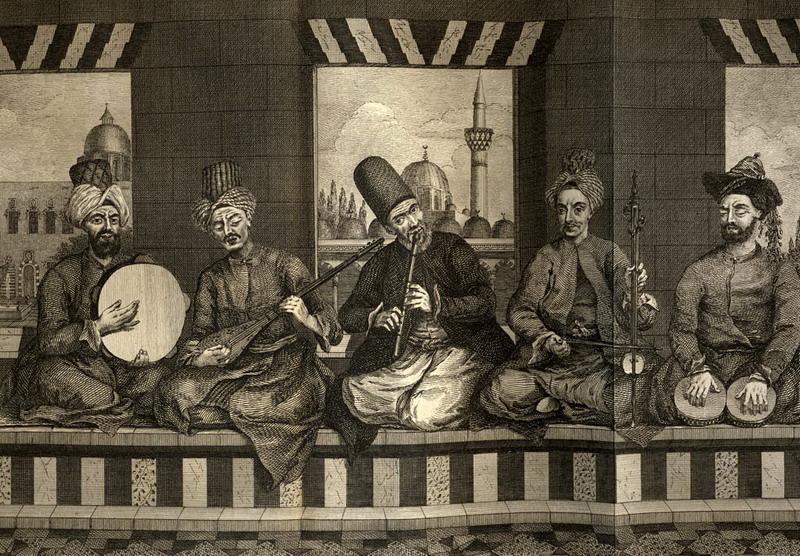
Pre-Islamic Arabia was a cradle of musical achievement, with Yemen as a main center under the patronage of the Kings of Sabaʾ. Poets recited poems with high notes, and singing was entrusted to women who played instruments like the drum, lute, or rebab. Compositions were simple, sung in a single maqam. In the early Islamic period, al-Kindi proposed adding a fifth string to the oud and identified twelve tones on the Arabic scale. Al-Farabi wrote a notable book on Islamic music, and his pure Arabian tone system is still used. In the 20th century, Egypt became a center for musical innovation. Female singers like Umm Kulthum and Fairuz adopted a secular approach. Arabic music began to take on a more Western tone in the 1940s–1960s, with artists using Western instruments. By the 1970s, Arabic pop emerged, blending Western styles with Arabic instruments and lyrics.
Reader's Guide
Arabic music's significance lies in its long history of interaction with other regional styles and its influence on European medieval and classical music. Many European instruments, including the lute, rebec, and guitar, have roots in Arabic instruments such as the oud, rebab, and qitara. The Arabic rabāb is the earliest known bowed string instrument and ancestor of all European bowed instruments. The maqam system, foundational to Arabic music, was documented by early theorists like al-Kindi and al-Farabi. In the modern era, Arabic music evolved through nationalism in Egypt, the rise of female singers, and the incorporation of Western elements, leading to the development of Arabic pop. Western pop music was also influenced by Arabic music in the early 1960s, contributing to the development of surf music and later garage rock and punk rock.
Did You Know?
- Pre-Islamic Arabian music was similar to that of Ancient Middle Eastern music.
- Al-Kindi identified twelve tones on the Arabic musical scale based on finger positions on the oud.
- The English words lute, rebec, and naker are derived from Arabic oud, rabab, and naqareh.
Taxonomic Placement and the Arbitrary Nature of Genre
Arabic music occupies a position within the broader taxonomy of world music, specifically nested under the Middle Eastern regional category. Like all genre classifications, its boundaries are often arbitrary and subject to dispute, with closely related forms frequently overlapping one another. The larger genre of Arabic music comprises more specific sub-categories, reflecting the principle that broader styles encompass narrower traditions. This hierarchical structure—where a parent genre branches into specialized forms—applies universally across musical classification, from Western classical periods to popular music sub-genres. The very act of categorizing Arabic music alongside or apart from neighboring traditions involves choices that scholars and industry participants may contest, underscoring that genre labels are tools for organization rather than fixed truths about musical identity.
Internal Diversity: Sub-genres and Distinct Styles
Within the umbrella of Arabic music, the source material identifies several distinct sub-genres and styles, including Arabic pop music, Fann at-Tanbura, Fijiri, Khaliji, and Liwa. These represent the principle that larger genres and styles comprise more specific sub-categories. The presence of both a pop variant and several named traditional or regional forms illustrates the breadth of musical expression encompassed under a single regional label. Each of these sub-categories likely carries its own conventions, instrumentation, and audience, yet they are grouped together under the broader Arabic music heading for purposes of classification. This internal diversity mirrors the pattern seen across all musical traditions, where a single regional or cultural label conceals a rich spectrum of distinct practices rather than a monolithic sound.
Neighboring Traditions and the Middle Eastern Cluster
Arabic music does not exist in isolation within the Middle Eastern regional category. It is listed alongside Kurdish folk traditions—including Hayran, Dengbêj, and Kurdish maqam—as well as Persian traditional music, Sawt, the music of Israel, Turkish folk music, and Gypsy music. This grouping reflects the overlapping and closely related nature of musical forms in the region, where boundaries between traditions are often porous and disputed. The placement of Kurdish maqam within the same regional cluster as Arabic music points to structural and cultural interconnections, while the presence of Turkish and Persian traditions highlights the historical ties that complicate simple national or linguistic categorization. For listeners and scholars alike, this cluster demonstrates that regional music classification captures geographic and cultural proximity as much as it does distinct musical identity.
Commercial Labeling and the World Music Question
The classification of Arabic music—and regional music more broadly—is shaped significantly by commercial and distribution considerations. Most music genres were created by music labels to target new audiences, and classification serves the practical purpose of helping listeners find music and enabling its distribution. In the specific case of regional and national music with no significant commercial impact abroad, the source notes that in North America and Western Europe, genres not originating from the Western world are sometimes classified as world music. This means Arabic traditional forms, when encountered in Western retail or streaming contexts, may be filed under world music rather than recognized as a distinct tradition with its own internal taxonomy.
Gallery



Frequently Asked Questions
What is Arabic music in simple terms?
Arabic music refers to the broad collection of musical traditions produced across the Arab world, spanning numerous countries and regions. Rather than being a single style, it covers a wide spectrum of genres that have evolved over centuries while interacting with neighboring musical cultures.
What is the Maqam system and why does it matter?
The Maqam system is a set of melodic modes that forms the structural backbone of much traditional Arabic music. It governs how notes are ornamented, how phrases are shaped, and how a piece moves emotionally, making it one of the most recognizable hallmarks of the tradition.
How did Arabic music influence European instruments and music?
During periods of cultural exchange, particularly in medieval Spain and the broader Mediterranean, Arabic musical concepts and instrument designs traveled into European practice. Elements such as the oud's design informed the development of lute-family instruments, and melodic ideas from Arab music can be traced in early European compositions.
Is Arabic music limited to one country or one sound?
No, it is an umbrella term covering the musical output of every people and nation within the Arab world. Styles vary significantly from country to country, yet they share common roots in the Maqam framework, rhythmic cycles, and a long history of cross-regional borrowing.
What does modern Arab pop have to do with traditional Arabic music?
Modern Arab pop blends contemporary production, Western pop structures, and electronic elements with melodic sensibilities drawn from the traditional Maqam system. It is one of the most widely consumed expressions of Arabic music today and keeps the older modal vocabulary alive for new generations.
More in Musical Genres And Styles 1-21
Spotted an error? Know more?
This is a living reference — every entry is fact-audited, and reader corrections feed straight into our audit queue. Suggest an edit · See this site's audit record